
Ugland House Explained
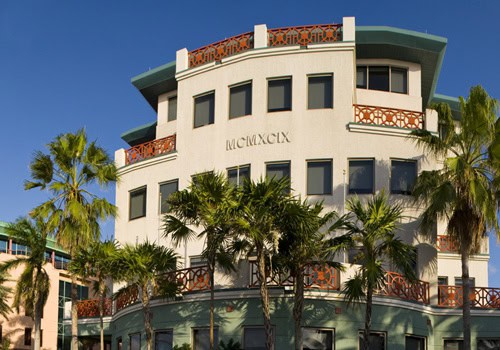
Ugland House is an office building in George Town, Grand Cayman and is the headquarters of international law firm Maples and Calder.

Dispelling the Myth
An overview of the true purpose of setting up Cayman companies and other business entities.
A Transparent Approach
The Cayman Islands has a well-established strong record of cooperation with the US and international regulators.

Financial Services in Cayman
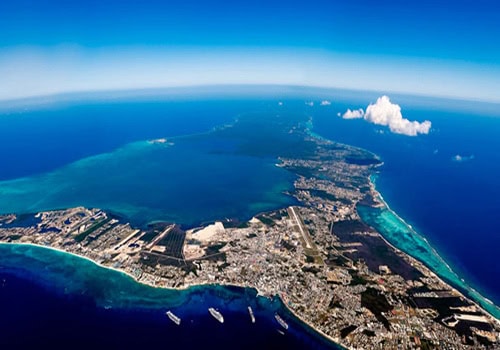
The Cayman Islands has always been an open, free market, economy, and from the 1960's onwards, successfully invested its "historic capital" to the benefit of the financial services sector.
A Reputation of Credibility
The United States Government Office (GAO) report has acknowledged and validated Maples and Calder's role in facilitating international finance and commercial activity.


A History of Stability
The Cayman Islands have been a member of the 30-nation Caribbean Financial Action Task Force ("CFAFT") since its inception in 1992.
A Well-regulated Jurisdiction
Over the past 25 years, the Cayman Islands has invoked numerous statutory measures to cooperate with and assist foreign governments, authorities and courts with the provision of information held in the Cayman Islands.


Recent Press & Articles
Cayman's anti-money laundering laws are recognized by the Financial Action Task Force as more compliant with international standards than those of the U.K. and by the International Monetary Fund for promoting a "strong compliance culture".
Overview
Ugland House is an office building in George Town, Grand Cayman. Maples and Calder, a leading international law firm advising financial, institutional and business clients around the world, is the sole tenant at Ugland House. The building has been the subject of highly-charged and unfair comment in press and political circles. Amongst other things, companies registered at Ugland House have been described as “shells”, owned by individuals to evade tax and take advantage of secrecy laws. This is not the case and mischaracterises the true purpose of setting up Cayman companies.
The Cayman Islands strongly adheres to international anti-money laundering and anti-terrorist financing standards and has invoked numerous statutory measures to cooperate with and assist foreign governments, authorities and courts with the provision of information held in the Cayman Islands.
This website seeks to dispel the myths surrounding Ugland House and the Cayman Islands and answer several questions that have arisen out of the need to understand exactly what really happens here. Offshore vehicles, such as those registered at Ugland House, operate in a highly developed and stable regulatory structure, make a lasting and necessary contribution to economies and jobs onshore and play a crucial role in the worldwide economic recovery and growth as a whole. This is a well known understanding of the nature of institutional financial work by those within the industry but is often misunderstood by the wider public. This website further aims to ensure that the negative image generated is not interpreted as fact.
Ugland House is the registered office address of more than 18,000 Cayman companies and other business entities.
There is nothing unusual about this. Most advanced jurisdictions, including the US and the UK, require a registered office (or “agent”) address for companies incorporated under their laws. In Delaware, for example, one building in Wilmington provides that service to more than 200,000 Delaware companies. The service involves nothing more than the provision of a statutory address as required by law. The actual business of those companies is not transacted in Ugland House (in the same way that the business of the Delaware companies is not actually transacted in Wilmington).
Cayman is a leading jurisdiction for the formation of:
- international investment funds (including hedge funds and private equity funds) managed by major financial institutions and investment fund managers;
- global business joint ventures; and
- companies formed by multinational businesses.
Those vehicles often provide an opportunity for pooling global capital from institutional investors – including lenders, pension funds, charitable foundations and university endowments – to support economic development worldwide. They are established by major financial and institutional clients on advice from legal and tax advisers in the most reputable and well-known law and accountancy firms in London, New York and other leading financial centres around the world.
US government agencies and the World Bank invest in Cayman investment funds. Several support businesses and finance infrastructure projects in developing countries in South America, the Middle East and Africa.
US, UK and other European government agencies routinely guarantee the financing of new commercial aircraft placed through Cayman vehicles.
The importance of Cayman and other offshore financial centres in facilitating global liquidity and capital flows cannot be over-emphasized, particularly in today’s difficult economic environment. Businesses and governments in both developed and emerging economies benefit significantly from them.
Frequently Asked Questions
How can 18,000 companies claim to be conducting business out of Ugland House, a small five-storey building in Cayman? That's impossible, so something wrong must be happening there.
This is a misconception about the role of a company’s registered office.
There is a misconception that a company’s registered office address and operating business address are the same. The reality is that companies using Ugland House as their registered office do not actually claim to operate their businesses from that location.
Registered office is not the site of business operations.
The registered office of a company is not the same as, nor is it interchangeable with, the location of its business operations. Jurisdictions in the United States and around the world have a similar basic corporate law requirement that a company must have a registered office in the jurisdiction in which it is incorporated. The registered office actually serves a very narrow function to act as a statutory agent where, for example, a company can be served with documents arising from litigation.
The Cayman Islands’ registered office function is similar to Delaware
The roles of the Cayman Islands and its registered office function are almost identical to the roles of Delaware and Delaware-based registered agents in the United States. According to the Division of Corporations of the State of Delaware: “The State of Delaware is a leading domicile for U.S. and international corporations. More than 850,000 business entities have made Delaware their legal home. More than 50% of all publicly-traded companies in the United States including 63% of the Fortune 500 have chosen Delaware as their legal home.” More than 200,000 entities alone have an address at 1209 Orange Street, Wilmington, Delaware – over 10 times the number of registered entities at Ugland House in the Caymans.
Isn't tax evasion the reason for forming companies and conducting business transactions in the Cayman Islands? Don't investors in Cayman Islands entities seek to free themselves from any form of tax?
Tax neutrality, not tax evasion or avoidance.
Investors and their advisors choose the Cayman Islands for many prudent commercial and business reasons, one of which is tax neutrality, but not tax evasion. Investors are still responsible for taxes in their home country. Cayman Islands entities provide a tax neutral platform so that investors from multiple jurisdictions are not subject to additional layers of foreign taxation in addition to the investors’ home country tax. This tax neutrality provides a level playing field for all investors.
US government agencies recognise and facilitate the use of Cayman Islands entities for international business transactions.
The global financial system needs legal entities to be formed in a stable jurisdiction on a tax-neutral basis (whether in the Cayman Islands or elsewhere) to facilitate international business transactions. In fact, US government agencies such as the Overseas Private Investment Corporation (“OPIC”) and the Export-Import Bank (“Ex-Im”), along with the World Bank’s International Financial Corporation are familiar with, invest in and utilize Cayman Islands entities for international transactions. In a July 2008 GAO report on the Cayman Islands, “Ex-Im Bank officials explained that they frequently created Cayman Islands entities to facilitate the purchase of US aircraft.” Similarly, the GAO report notes that “OPIC officials stated that foreign investors…value the Cayman Islands’ reputation for legal neutrality towards investors from different jurisdictions.” They also recognise that their legal rights and security interests will be recognised under Cayman Islands law for the reasons specified in the next section. Furthermore, several Cayman Islands entities with Ugland House addresses were established to facilitate investment in the US Government’s Troubled Asset Relief Program (“TARP”) and Term Asset-Backed Securities Loan Facility (“TALF”) schemes which helped bring liquidity to the global markets after the global financial crisis. We have assisted certain US and international governmental agencies in the establishment, or provision of legal advice on the use of, such entities.
The Cayman Islands is a facilitator for international investment, providing a commercial vehicle to bring together investors from around the world to participate in multinational business transactions.
The challenge for multinational companies, investment banks and fund managers is often how to create a business or investment fund structure which is able to accommodate investors from all over the world within the complex parameters of existing tax and securities laws that apply to the investors, the management team and the business or investment activities, in their multiple home jurisdictions. The Cayman Islands offer a tax neutral platform to achieve these objectives without foreign exchange controls and without significant restrictions on interest and dividend payments, while allowing the repayment of capital, or the ability to repurchase shares or redeem or repurchase debt. The US Government Accountability Office (GAO) noted in a July 2008 report that “the Caymans Islands’ reputation as a stable, business-friendly regulatory environment attracts business.”
Tax neutrality means no additional layers of foreign tax on top of the investor’s home country tax.
The fact that there are no taxes in the Cayman Islands on certain transactions unfortunately often leads to a public misconception that investors in offshore companies are free from all forms of taxation. This is not the case at all. Investors based in onshore jurisdictions are likely to be taxed in their home countries on dividend, interest, and other income received from the offshore company and on any capital gains realized on the sale or redemption of shares in the offshore company.
Many onshore jurisdictions have also introduced tax rules that tax income and gains which are rolled up in the offshore vehicle as if they had been distributed. Additionally, the offshore company may itself be subject to withholding taxes imposed on income (such as dividends) or gains on its investments by tax authorities in the onshore jurisdictions in which the offshore company’s businesses or investments are located, and these withholding taxes are frequently not creditable against taxes paid by the investor in the offshore vehicle on the same income or gains. For example, the U.S. makes a 30% withholding on certain dividends paid to Cayman investment funds.
Sound business reasons for use of Cayman entities.
What makes this tax-neutral platform in the Cayman Islands so attractive for international investors is that it is supported by a fully-developed business law, an English-based legal system, and a regulatory and professional infrastructure capable of implementing large and complex international business transactions.
These investors consider, for example:
- speed and simplicity of establishing Cayman Islands entities;
- relatively low cost of establishment, particularly in the context of typical transaction sizes;
- flexible and practical business statutes, for example corporate transactions essentially limited by solvency rather than traditional notions of “capital”;
- Cayman Islands insolvency law, which is simple and effective and recognises and enforces security interests and creditors’ rights, and hence of great comfort to lenders and investors (and again reducing costs);
- robust and healthy compliance culture;
- english-based legal system, established judiciary, absence of political or sovereign concerns and a final court of appeal in the form of the UK Privy Council in London;
- professional infrastructure and reputation. The Cayman Islands are well-known for their established and experienced financial services sector and their substantial capacity. That is a feature that grows on itself and having financial institutions, institutional investors, rating agencies and professional firms elsewhere used to and comfortable dealing with counterparts in the Cayman Islands may have become as big a reason as any for the use of Cayman Islands vehicles in many cases;
- recognition of corporate personality. The ability of multinationals to use separate group subsidiaries to maintain separate businesses and assets, often with their own ring fenced financing, can be a major contributor in the successful management of business and jurisdictional risks in cross-border transactions; and
- compliance with international anti-money laundering, anti-terrorist financing, anti-bribery, trade and finance sanctions, and other financial regulatory standards.
Is the Cayman Islands an offshore tax haven shrouded in secrecy that invites money laundering and tax abuse and discloses virtually no information on its financial transactions to the international community?
The Cayman Islands is compliant with predominantly all the Financial Action Task Force (“FATF”), anti-money laundering and combating of terrorist financing recommendations and currently rank in the top 10 jurisdictions globally (calculating “compliant” and “largely compliant” ratings) for overall compliance among over 150 other jurisdictions, ranking higher than countries such as the United Kingdom, Spain, Italy, Germany, Australia and many other FATF members. (Source: FATF and affiliated websites)
In certain areas such as retroactive client identification obligations, the regulation of trust companies, company formation and registered agents, the abolition of bearer shares and the regulation of, and imposition of anti-money laundering obligations on, hedge funds, and most other investment entities, the Cayman Islands are more advanced than most onshore jurisdictions.
Robust compliance culture, not secrecy, is the force behind the Cayman Islands’ growth as an international finance centre.
Secrecy is not the driving motivator for reputable business coming to the Cayman Islands. The presence – not the absence – of a robust and healthy compliance culture of laws, regulations and international cooperation has contributed to the Cayman Islands’ growth as an institutionally-focused, specialised financial centre.
The Cayman Islands has undertaken extensive efforts to promote transparency and information exchange.
To date the Cayman Islands has signed over 30 in-force bilateral Tax Information Exchange Agreements (“TIEAs”).These agreements conform to the model developed, with US participation, by the OECD Global Forum on Taxation (of which the Cayman islands is a member), and are based on forms endorsed by both the G-8 and G-20 countries as reflecting “high standards of transparency and exchange of information for tax purposes.”
The Cayman Islands is also a signatory to the Convention on Mutual Administrative Assistance (“MCAA”) in tax matters and has signed intergovernmental agreements with the US and the UK, in compliance with which the Cayman Islands has implemented the US Foreign Account Tax Compliance Act (“FATCA”) and the OECD’s Common Reporting Standard (“CRS”). By being a signatory to the MCAA, the Cayman Islands can share tax related information with any of the other approximately 100 signatory jurisdictions, without needing to have a separate TIEA.
As a result, all Cayman Islands’ financial institutions (as are very broadly defined under FATCA and CRS) are required (amongst other things) to conduct due diligence on their investors/ account holders to identify whether any such accounts are considered “Reportable Accounts”. Information on such Reportable Accounts must be reported to the Tax Information Authority of the Cayman Islands (“TIA”). The TIA transmits the information reported to it to the overseas fiscal authority relevant to a Reportable Account (e.g. the IRS in the case of a US Reportable Account or HRMRC in the case of a UK Reportable Account) annually on an automatic basis.
More recently, the Cayman Islands has, together with 65 other jurisdictions, committed to participate in the country-by-country reporting component of the OECD Base Erosion and Profit Shifting initiative (BEPS), which aims to eliminate the risk of transfer pricing (and avoidance of tax in operational centres) by multi-national enterprises.
In July 2017, the Companies Law was amended to introduce a new requirement for in-scope Cayman Islands companies to maintain a register of beneficial ownership information with its licensed corporate service provider in the Cayman Islands. This beneficial ownership information must be filed with the competent authority and is then placed on a search platform which can be searched on proper request made to the competent authority by local regulators and UK authorities.
In 2010, the OECD Peer Review Global Forum on Transparency and Exchange of Information recognized the Cayman Islands as a “well- developed legal and regulatory framework” that promotes access to information by ensuring its legal authorities are “invested with broad powers to gather relevant information.”
The Financial Stability Board (FSB) has also confirmed its designation of the Cayman Islands as a jurisdiction which demonstrates sufficiently strong adherence to international standards on cooperation and information exchange.
Strong adherence to international anti-money laundering and anti-terrorist financing standards
The Cayman Islands are currently one of the highest rated offshore jurisdictions for complying with international standards concerning anti-money laundering and combating terrorist financing and currently rank in the top 10 jurisdictions globally (for largely compliant and compliant ratings) out of over 150 onshore and offshore jurisdictions reviewed under the FATF mutual evaluations. The Cayman Islands is about to undergo its fourth mutual evaluation against the FATF Recommendations.
IMF review attests to effectiveness of the Cayman Islands financial regulatory system.
The Cayman Islands is regularly reviewed for prudential regulatory standards by the International Monetary Fund (“IMF”) and World Bank. In 2009, the IMF conducted an on-site assessment of the regulatory and anti-money laundering regime in the Cayman Islands, and concluded that the Cayman Islands had “an increasingly effective system of regulation” and that “the overall compliance culture within Cayman is very strong, including the compliance culture relating to anti-money laundering obligations”.
The Cayman Islands is recognised as a leading international financial centre, securing top ratings.
In September 2013, UK Prime Minister, David Cameron, issued the following statement in the House of Commons: “I do not think it is fair any longer to refer to any of the overseas territories or Crown dependencies as tax havens. They have taken action to make sure that they have fair and open tax systems.” This was in response to a question on OT/CD signups to the Multilateral Tax Convention.
The OECD Secretary-General’s Report to the G20 Leaders, issued in early September 2013 showed ratings for 98 jurisdictions, based on nine criteria, giving a green, amber, or red rating for each. ‘Green’ denoted the highest rating.
The Cayman Islands was rated green across all nine categories. Brazil and the US had two ambers, Russia had seven, and Canada, Germany, Spain, and the UK each had one.
In its latest report, Moody’s outlines that the Cayman Islands carries a rating of Aa3. This high rating reflects a number of important considerations satisfied by the Cayman Islands. These include:
- a very high per capita Gross Domestic Product (GDP) – of which the latest figure is US$59,980.95 for 2016
- a Debt-to-GDP ratio of 18.7% at the end of 2015, which is a comparatively low debt burden viewed against other rated jurisdictions;
- a high score for governance indicators along with its political connection to the United Kingdom; and
- a very low susceptibility to Event Risk.
The Cayman Islands has a well-established, strong record of cooperation with the US and international regulators.
The Cayman Islands Government has taken many proactive steps to enhance its cooperation with both US and international regulators to adopt “best practice” international standards and to strengthen its regulatory structure against money laundering, terrorism, crime and tax fraud.
The government has cooperated with the Organisation for Economic Cooperation and Development (“OECD”), the FATF, the IMF and the governments of many onshore jurisdictions (including the US and the UK).
The Cayman Islands Monetary Authority (“CIMA”) is also a full member of the International Organization of Securities Commissions (“IOSCO”) and the Offshore Group of Banking Supervisors and has executed numerous Memoranda of Understanding and Undertakings with equivalent regulatory agencies in foreign jurisdictions, including the US Treasury, the US Federal Reserve, the US Securities and Exchange Commission (“SEC”) and Commodity Futures Trading Commission (“CFTC”). (See Cayman and the Regulators)
CIMA has responded to the call for good governance with the introduction of a Statement of Guidance on Corporate Governance for Licensees and separately for Regulated Mutual Funds. Equally, the private sector in the Cayman Islands has responded to the call for independent directors, to the point where almost 80% of new funds tracked have independent directors.
The Cayman Islands Government
- has also enacted:
- Anti-Corruption legislation to combat bribery of or by both foreign and local government officials;
- The Securities Investment Business Law to regulate investment managers and advisors;
- Tax information sharing legislation to implement the EUSD, TIEAs, FATCA, CRS and (shortly) BEPS;
- Data protection legislation in alignment with current European standards;
- Whistleblowing legislation to encourage the sharing of information in circumstances where laws and public policy may have been contravened; and
- Amendments to the Mutual Funds Law to increase the minimum investment to US$100,000 into investment funds registered under section 4(3) of the Mutual Funds Law and to regulate certain Master Funds, and
- has cooperated with EU regulators to assist with the implementation of the EU Directive on Alternative Investment Fund Managers (“AIFM”);
The Cayman Islands were one of the first jurisdictions to give an advanced commitment to the OECD in connection with its “harmful tax” initiative and as a result were not included on the OECD’s list of harmful tax havens.
Cayman and the Recovery of Global Financial Markets
Companies formed in the Cayman Islands and other well-regulated offshore jurisdictions are key players in the international financial community and well-placed to play an important part in the recovery of the global financial markets.
International businesses with stakeholders and investors from several countries frequently have to choose where to incorporate a business entity without giving any one stakeholder a “home field advantage.” For these businesses, Cayman Islands companies provide an entity with a business-friendly neutral jurisdiction, acceptable to all stakeholders, with stable political and judicial institutions and appropriate regulation, a deep reserve of local professionals, and a legal system that is well respected internationally and safeguards the rights of creditors and investors.
For example, Cayman Islands companies registered at Ugland House:
- act as investment funds for international institutional investors investing in government and sovereign debt. For example, according to U.S. Treasury figures; Cayman Islands entities are collectively one of the largest holders of U.S. sovereign and private debt instruments;
- help hedge fund and private fund equity managers based in major financial centres in the UK, the US and Asia attract and service international investors;
- help provide microfinance loan facilities to small businesses in developing countries often with the help of institutions like the World Bank or other national development aid organizations and agencies;
- enable U.S. corporations to access global markets more competitively;
- enable syndicates of international banks to make secured loans to finance power and other infrastructure projects in developing countries;
- help entrepreneurs in emerging market countries to effect initial public offerings in the international capital markets;
- assist aircraft manufacturers in the US and Europe to sell commercial aircraft to emerging-market airlines with the assistance of export-credit agencies;
- provide insurance companies and related products, such as captive insurance companies, catastrophe bonds and other alternative risk transfer products; and
- take part in the U.S. government’s Term Asset-Backed Securities Loan Facility (“TALF”) program which is designed to encourage private investors to buy “toxic assets” from banks to help free up their balance sheets to allow them to recommence lending to consumers, small businesses and students in need of financial aid. One of the companies registered at Ugland House is raising capital from banks across the world to create a derivatives clearing house similar to one that President Obama recently advocated to prevent systemic risks in the derivatives market.
These transactions help support hundreds of thousands of jobs for service providers and businesses (e.g. multinational financial institutions, manufacturers, fund managers, fund administrators, paying agents, valuation agents, lawyers, audit firms etc.) based in the US, Europe and Asia who provide services and goods to international customers via Cayman Islands companies and ultimately generate taxable business activities in these countries.
The United States Government Accountability Office (“GAO”) report has acknowledged and validated Maples and Calder’s role in facilitating international finance and commercial activity, even citing U.S. government agencies and the World Bank as key figures that invest in Cayman Islands investment funds registered at Ugland House.
Transactions involving Cayman Islands companies create cross-border business throughout the international community and will continue to serve as a catalyst in the recovery of the international markets.
Cayman and the Regulators
Cayman’s financial service industry has been thoroughly reviewed by various international bodies over the last few years. Indeed the US government has recently written a report about both Ugland House and Cayman: at the request of Congress its auditing agency, the United States Government Accountability Office (“GAO”), visited Cayman and spent time at Ugland House, where Maples and Calder had the opportunity to explain to them directly the nature of its business and the role of a registered office provider under Cayman law.
The GAO’s report, dated July 2008, gave both Ugland House and Cayman a clean bill of health. It acknowledged that Cayman has a stable and internationally compliant legal and regulatory systems and that the Cayman government cooperates fully with US tax enforcement and other regulatory investigations.
The Cayman Islands is a signatory to the MCAA in Tax Matters and has implemented FATCA and the CRS, which provide for the automatic exchange of financial information to the US and CRS Participating Jurisdictions (which currently number more than 90, and include all EU countries). This is further described above. In addition, the Cayman Islands has signed a total of 39 bilateral TIEAs.
The countries with which Cayman has signed bilateral TIEAs are:
| Argentina | Germany | New Zealand |
| Aruba | Greenland | Norway |
| Australia | Guernsey | Poland |
| Belgium | Iceland | Portugal |
| Brazil | India | Qatar |
| Canada | Ireland | Seychelles |
| China | Isle of Man | St. Maartin |
| Curacao | Italy | South Africa |
| Czech Republic | Japan | Sweden |
| Denmark | Malta | The Faroe Islands |
| Finland | Mexico | United Kingdom |
| France | Netherlands | United States |
In 2005, the Cayman Islands implemented the Reporting of Savings Income Information (European Union) Law (2014 Revision) and regulations made under such law (the “Cayman EUSD Legislation”), whereby Cayman Islands banks must report information on bank accounts held by EU residents to the authorities. The Cayman EUSD Legislation is similar to the EU Savings Directive. Notwithstanding the repeal of the EU Savings Directive, the Cayman EUSD Legislation remains in force, however it is expected that it will also be repealed following the introduction of the CRS, which is discussed above.
Below is additional information on the Cayman Islands banking and financial markets, regulations to promote information disclosure and transparency and policies to prevent money laundering and other illicit uses of the financial infrastructure.
Regulation
- The Cayman Islands Monetary Authority (“CIMA“) is the financial services regulator, responsible for prudential and anti-money laundering regulation of licensees and registrants.
- CIMA is a full member of the International Organisation Securities Commission (“IOSCO”), the Offshore Group of Banking Supervisors (“OGBS”), the Offshore Group of Insurance Supervisors (“OGIS”) and the Offshore Group of Collective Investment Scheme Supervisors, as well as a member of the OECD’s Level Playing Field sub-committee.
- CIMA adopts and applies the Basel Core principles (for banking), International Association of Insurance Supervisors (“IAIS”) principles (for insurance), IOSCO principles (for securities and investment) and the Organisation for Economic Cooperation and Development (“OECD”) principles for corporate governance. Cayman is a member of the Steering Group of the OECD Global Forum on Tax Transparency and Exchange of Information.
- In the latest review of the Cayman Islands conducted in 2009, the International Monetary Fund (“IMF“) recognised that an “extensive program of legislative, rule and guideline development has introduced an increasingly effective system of regulation, both formalising earlier practices, and introducing enhanced procedures.” (Source: CIMA website).The IMF is scheduled to conduct a review of the legislative and regulatory framework again in 2018. (Source: CIMA website)
Banking
- The Cayman Islands is recognised as one of the top 10 international financial centres in the world, with over 40 of the top 50 banks holding banking licences. As at September 2017, there were approximately 155 licensed banks, with approximately two thirds being international bank branches. Branches and subsidiaries are regulated by CIMA on the basis of consolidated supervision in connection with the onshore home regulator. (Source: CIMA website)
- Private banks number less than 20 and are required to establish a physical presence in the Cayman Islands, with a greater minimum net worth and capital adequacy ratio. (Source: CIMA website)
- For all banking licensees CIMA typically adopts more stringent capital adequacy requirements than proposed under the Basel Core principles.
- Reasons to establish a banking presence in the Cayman Islands include the provision of multi currency accounts (without exchange restrictions) with access to international markets, depositary sweep facilities and internal treasury functions, on a tax neutral basis.
Investment Funds
- The Cayman Islands is recognised globally as the leading jurisdiction for the domicile of investment funds.
- The Cayman Islands has well-established legislation and standards applicable to the fund industry, which is regularly amended to meet with industry and international regulatory standards.
- As at September 2017, there were approximately 10,630 investment funds registered with CIMA. Many fund administrators (approximately 100) are also licensed or registered with CIMA. (Source: CIMA website)
- 17,896 exempted limited partnerships are registered in the Cayman Islands, many of which were involved in major private equity funds formation and related transactions.
Cayman Islands Hedge Funds and Private Equity Funds
Ugland House is the registered office for many of the world’s best hedge funds and private equity funds. There are many good, valid and legitimate reasons why the Cayman Islands is the domicile for the world’s leading hedge funds and private equity funds:
- These funds allows global investors and businesses to participate in international transactions in a neutral cost efficient jurisdiction with a tried and tested legal system which protects investors and creditors rights.
- International businesses and financial services firms use companies based in the Cayman Islands for reasons of tax neutrality and not tax evasion or tax avoidance.
- The financial services industry is a regulated industry with a strong compliance and anti-money laundering culture.
- Cayman Islands companies play an important part in the global economy and facilitate the allocation of capital to both developed and emerging countries.
- The alternative investment fund industry helps create and support jobs all over the world.
- A very significant amount of tax revenue is indirectly generated in onshore countries via this industry (e.g. by economic activity generated in or by service providers based in those countries providing services to offshore funds).
- Alternative investment funds are not just for the wealthy, but provide diversified investment opportunities for everyone with a pension fund to earn good long term risk adjusted returns.
The Paradise Papers unfairly and misguidedly criticise institutional investors like university endowment funds and even Her Majesty the Queen for investing in Cayman Islands private equity funds. Many of the world’s best hedge funds and private equity funds are domiciled in the Cayman Islands and institutional investors can take comfort from the fact that offshore alternative investment funds are a perfectly legal, normal and usual way for global investment activities to be conducted. Rather than being simply for the wealthy, most pension funds now allocate between 5-10% of their assets into offshore hedge funds and private equity funds; so everyone has funds invested indirectly in the Cayman Islands.
This offshore alternative investment funds are:
- good for investors, including pension funds, sovereign wealth funds, not-for-profit organisations and charities – and their stakeholders.
- tax neutral,, eliminating duplicative layers of taxes in Cayman which unfairly diminish stakeholder returns. They do not affect onshore tax revenues as investors pay their taxes in their home jurisdictions and Cayman funds pay withholding taxes in other countries on their investments. For further reference materials on this topic, The Alternative Investment Management Association (AIMA) published a paper in April 2016 entitled “Transparent, Sophisticated, Tax Neutral: The Truth about Offshore Funds”, which contains some useful content on this topic.
- transparent,, being at the cutting edge of regulatory and tax compliance and information exchange, Cayman is not a secrecy jurisidiction or a tax haven. Cayman authorities make reports to onshore tax authorities under tax information exchange agreements and automatically under laws based on the EU Savings Directive, FATCA and Common Reporting Standards (CRS); so investors cannot hide their money in Cayman.
- flexible,, cost effective access to more fund managers and more sophisticated and diversified investment strategies.
- good for the global economy,, money invested in Cayman is not kept in Cayman but is recycled into the global economy through international investments providing liquidity to global stock markets, providing alternative sources of financing to developing and developed economies, creating significant jobs and generating tax revenues in onshore financial centres. For example:
- Cayman companies help finance and sell or lease Boeing and Airbus aircraft supporting jobs in the US and EU.
- Cayman investment funds help fund important infrastructure projects in developing countries, such as power plants, roads, agribusiness and hospitals
- Many companies listed on the Hong Kong Stock Exchange (HKSE) are Cayman companies, helping Asian (esp. PRC ) business issuers with ample international fund raising opportunities, and acting as an ideal platform for non-Asian business issuers to achieve exposure in the rapidly growing PRC market.
Anti-Money Laundering (“AML”) and Combating of Terrorist Financing (“CFT”)
- The Cayman Islands have been a member of the 30-nation Caribbean Financial Action Task Force (“CFATF“) since its inception in 1992. (Source: CFATF website)
- Members of Cooperating and Supporting Nations of the CFATF include the United States, Canada, the United Kingdom, France, Mexico, Spain and the Netherlands. (Source: CFATF website)
- The CFATF is an Associate Member of the inter-governmental AML/CFT body, the Financial Action Task Force (“FATF“), and conducts regular peer assessments of its members based on the FATF 40+9 Recommendations, as well as 19 CFATF Recommendations. (Source: CFATF website)
- The Cayman Islands were reviewed by the CFATF in late 2007 and their report was issued in November 2007. The report recognised that the compliance culture in the Cayman Islands was well established and highly commendable.
(Source: CFATF website) - Of over 150 jurisdictions assessed to date by the FATF and its affiliates, against the FATF Recommendations, the Cayman Islands ranks in the top 10 jurisdictions globally, on the basis of calculating “compliant” and “largely compliant” ratings. (Source: FATF and affiliated websites)
- The Cayman Islands has been at the forefront in the Caribbean and offshore environment generally, in relation to implementing appropriate AML legislation. The Proceeds of Crime Law (2017 Revision), the Terrorism Law (2017 Revision), Misuse of Drugs Law (2017 Revision) the Anti-Money Laundering Regulations, 2017 and the application of international sanctions under Statutory instruments all reflect internationally accepted AML/CFT standards and they have been used as a model for other Caribbean nations.
- AML/CFT procedures are mandatory for all licensees, registrants and entities conducting relevant financial business. Unlike other jurisdictions, this also applies to corporate service providers and trust companies.
Transparency and Disclosure of Information
- Over the past 25 years, the Cayman Islands has invoked numerous statutory measures to cooperate with and assist foreign governments, authorities and courts with the provision of information held in the Cayman Islands. Such laws override any statutory or common law duties of confidentiality.
- Requests for information in relation to criminal matters can be made under provisions of the Criminal Justice (International Cooperation) Law, Mutual Legal Assistance (United States of America) Law, Misuse of Drugs Law and Proceeds of Crime Law. (Source: Cayman Islands Government (“CIG“) website)
- The Cayman Islands is also a party to the Hague Convention 1970 on the taking of evidence abroad and can share information with other Hague Convention signatories, under the Evidence (Proceedings in Other Jurisdictions) Order. (Source: CIG website)
- In relation to regulatory matters, CIMA has the ability to entertain requests for information from any recognised overseas regulatory authority and has entered into specific information sharing bilateral memoranda of understanding with over 40 other major regulators, including the US Securities and Exchange Commission and the UK Financial Services Authority. The Cayman Islands has also entered cooperation arrangements with all EU member state regulators in order to give effect to requirements under the EU Directive on Alternative Investment Fund Managers. (Source: CIMA website)
- In relation to disclosure for tax matters, the Cayman Islands made a commitment to the OECD to adhere to their principles on exchange of tax information and transparency. (Source: CIG website)
- The Cayman Islands signed a TIEA with the United States in 2001 and requests for information have been made and responded to under this regime. In all, TIEAs have been agreed with 39 countries, over 30 of whichare in force. (Source: CIG and Cayman TIA websites)
- The Cayman Islands government has implemented FATCA and CRS which provides for automatic sharing on financial account information of account holders of Cayman Islands financial institutions to the tax authorities in the home jurisdictions of such account holders. In 2005 the Cayman Islands implemented the EU Savings Directive with equivalent legislation, which (through bi-lateral treaties with all EU states) provided for automatic information-sharing on interest income paid to EU citizens from Cayman accounts. Notwithstanding the repeal of the EU Savings Directive, the Cayman EUSD Legislation remains in force. However it is expected that it will also be repealed following the introduction of the CRS (Source: CIG and Cayman TIA websites)
- In 2005, the Tax Information Authority Law was introduced, which established the Tax Information Authority as the competent authority in the Cayman Islands for dealing with foreign tax information requests and tax reporting under, the Convention on Mutual Administrative Assistance in Tax Matters bilateral arrangements, FATCA and CRS and the EU Savings Directive equivalent legislation. (Source CIG and Cayman TIA websites)
- The Cayman Islands has committed to introduce domestic legislation in 2018 to give effect to the country by country reporting component of the OECD initiative on Base Erosion and Profit Shifting (“BEPS”) to report on transfer pricing by multi-national enterprises that may be established in the Cayman Islands.
Recent Press
- The Telegraph: Stop condemning tax havens. It's perfectly legitimate to avoid taxation.
- Express: Hypocrisy over the Paradise Papers is truly breathtaking says Stephen Pollard.
- City A.M.: DEBATE: Can we close the loopholes that make the Paradise Papers kind of tax behaviour legal?
- City A.M.: Don’t let greedy MPs conflate tax avoidance with evasion.
- Conservative Home: Diego Zuluaga - The Paradise Papers. The rich are paying more tax than ever – and tax havens are a force for good.
- iea: Everybody is outraged about offshore investment funds because nobody understands what they are or what they do.
- The Scotsman: Bill Jamieson - Is it so bad to avoid tax within the law?
- The Spectator: Who decided that keeping money in ‘paradise’ is a crime? We should all thank havens.
- The Telegraph: Don't we all invest through a Cayman Island tax haven these days?
- The Economist: A massive trove of data on offshore transactions is leaked.
- The Telegraph: ‘Paradise papers’ divert attention from real tax issues.
Recent Press
- The Telegraph: Stop condemning tax havens. It's perfectly legitimate to avoid taxation.
- Express: Hypocrisy over the Paradise Papers is truly breathtaking says Stephen Pollard.
- City A.M.: DEBATE: Can we close the loopholes that make the Paradise Papers kind of tax behaviour legal?
- City A.M.: Don’t let greedy MPs conflate tax avoidance with evasion.
- Conservative Home: Diego Zuluaga - The Paradise Papers. The rich are paying more tax than ever – and tax havens are a force for good.
- iea: Everybody is outraged about offshore investment funds because nobody understands what they are or what they do.
- The Scotsman: Bill Jamieson - Is it so bad to avoid tax within the law?
- The Spectator: Who decided that keeping money in ‘paradise’ is a crime? We should all thank havens.
- The Telegraph: Don't we all invest through a Cayman Island tax haven these days?
- The Economist: A massive trove of data on offshore transactions is leaked.
- The Telegraph: ‘Paradise papers’ divert attention from real tax issues.